Pectin in Tucumán: how much emissions are avoided by extracting it at source
Tucumán dries its lemon peel with natural gas and ships it to Europe, where the pectin is extracted. Extracting the pectin in the province would avoid about 780 kg CO₂e per tonne of peel, almost 4 t per tonne of pectin. The condition is that the plant processes wet peel during the harvest season.
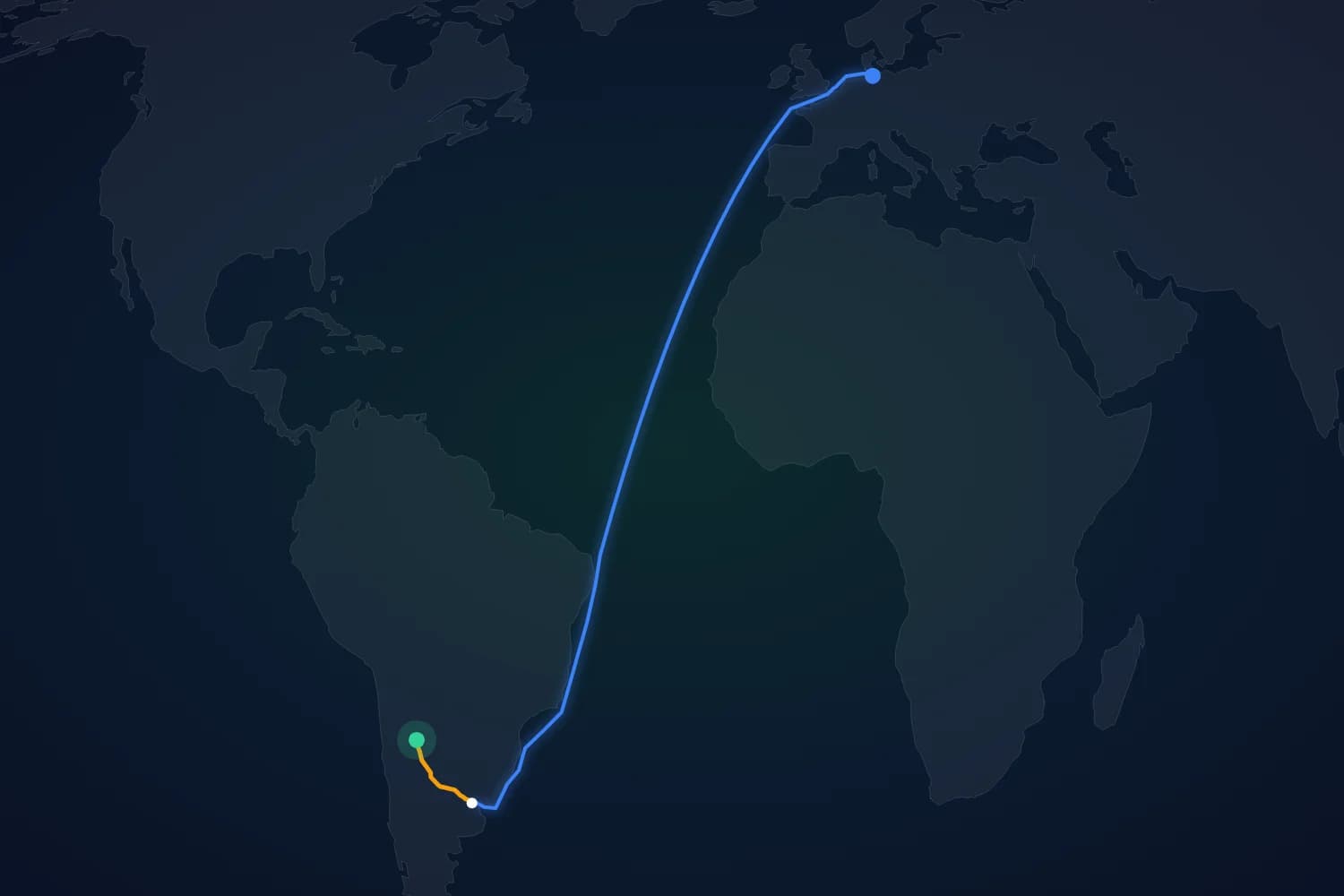
Where pectin comes from and where Tucumán's peel goes
Pectin is a polysaccharide from the cell walls of fruit. The food industry uses it as a gelling agent and thickener in jams, dairy and drinks. It is extracted with hot acidified water, precipitated with alcohol and dried to a powder; citrus peel is its main raw material.
Tucumán produced 1.575 million tonnes of lemons in 2019 and sent 77% to processing. After juice and oil are extracted, the peel is washed, pressed and dried in rotary kilns: it takes about 19 kg of fruit per kilo of dried peel. That peel is exported in 50 kg bags as raw material for pectin. In 2019 the main buyers were Germany (26%), Denmark (20%), France (13%), China (12%) and Mexico (10%).
Dried peel made up 14% of the USD 512 million exported by the lemon chain in 2024, at an average price of USD 1,216 per tonne. That is about 59 thousand tonnes in the year.
Meanwhile, Argentina imports the pectin it consumes: 753 tonnes in 2023, worth USD 10.6 million. Part of it comes from France, Denmark and Germany, three of the buyers of the peel.
Two routes for the same peel
The comparison follows one tonne of dried peel along two routes, with the pectin consumed in Europe in both. Only the stages that differ between them are counted.
- Today: exporting the peel
- All the peel is dried with natural gas, from 85% to 8% moisture. It travels 1,247 km by truck to the port of Buenos Aires and 12,312 km by ship to Hamburg. The pectin is extracted in Europe.
- With a plant in Tucumán
- The plant sits next to one of the juice plants, as the dryers do today, and during the harvest season extracts directly from wet peel. Peel from the other juice plants arrives by truck, over an assumed average of 50 km. Only the peel stored for off-season operation is dried. Only the pectin travels to the port and to Europe, 20% of the mass of the dried peel.
The province's dryers run about seven months a year, so 58% of the peel (7 months out of 12) is assumed to be processed without drying. Extraction uses the same energy in Tucumán as in Europe and is analysed separately.
Factors and data used
- Natural gas
- 2.617 kg CO₂e per m³: 1.957 from combustion and 0.660 from producing and delivering the gas to the point of use, with the factors of Argentina's national greenhouse gas inventory.
- Peel drying
- 200 kWh of thermal energy per tonne of fruit and 50 kg of dried peel per tonne of fruit, from a study published in the Revista Industrial y Agrícola de Tucumán in 2017. This is 414 m³ of gas and 1,084 kg CO₂e per tonne of dried peel.
- Freight
- GLEC Framework v3.2, aligned with ISO 14083: articulated truck of 40 to 44 t, 89 g CO₂e per tonne-kilometre; dry container ship on the Europe–South America lane, 86.2 g CO₂e per TEU-kilometre with 10 t per container.
- Electricity
- Argentine grid 2025: 0.221 kg CO₂e per kWh.
The drying consumption of 14.4 GJ per tonne of peel is the lowest of those we reviewed. If the real figure is higher, so are the savings.
How much is saved
For every tonne of dried peel, today's route emits 1,302 kg CO₂e in the stages compared and the Tucumán plant route 523 kg. The difference is 779 kg CO₂e, 60% less.
- Peel drying
- 1,084 kg CO₂e today, 452 kg with the plant in Tucumán: 633 kg less. This is 81% of the savings.
- Truck to Buenos Aires
- 111 kg CO₂e today, 22 kg moving only the pectin: 89 kg less.
- Ship to Hamburg
- 106 kg CO₂e today, 21 kg moving only the pectin: 85 kg less.
- Local haulage
- 27 kg CO₂e more, to bring wet peel from the other juice plants to the plant.
At a 20% yield, 5 t of dried peel are needed per tonne of pectin, and the savings are 3.9 t CO₂e per tonne of pectin. That yield is an assumption: published laboratory trials with lemon peel obtain 12 to 13%. At 13% the savings rise to 6.1 t CO₂e per tonne of pectin, so 20% is the conservative choice.
If the 59 thousand tonnes of peel exported in 2024 were processed in Tucumán this way, about 46 thousand tonnes of CO₂e would be avoided each year.
Which assumptions move the result
The savings stay positive in every case analysed. Only the share of peel that is dried moves them appreciably:
- Plant running only in the harvest season, all peel wet: 1,231 kg CO₂e per tonne of peel.
- Drying at the consumption published by a dryer manufacturer, 3.72 MJ per kg of water evaporated: 986 kg.
- Containers loaded with 6 t instead of 10 t: 836 kg.
- Denmark as destination instead of Germany, 13,398 km by sea: 787 kg.
- All peel dried before extraction: 146 kg, from freight alone.
There is no public industrial inventory of the energy used in extraction; the available studies are at laboratory or pilot scale. So we calculate how much would be needed to cancel the savings. Compared with Germany, the main destination, the Argentine grid emits less per kWh (0.219 against 0.363 kg CO₂), so the electricity used in extraction adds to the savings. Even against a zero-emission grid, the plant would have to use 17.6 MWh per tonne of pectin to cancel them.
Steam follows the same logic. Burning gas emits the same in both countries; the difference is the production of Argentine gas, 19 g CO₂e per MJ. Even assuming European gas had no production emissions, the plant would have to burn 205 GJ per tonne of pectin to cancel the savings: almost three times what it takes today to dry the peel it comes from.
How much gas, freight and water is saved
The same change of route also saves money and water. For every tonne of dried peel no longer exported:
- Drying gas
- Processing 58% wet avoids burning 242 m³ of gas per tonne. At GASNOR's tariff for large users in Tucumán during the 2024 season, ARS 156.75 per m³ before taxes, that is about USD 41 at the average wholesale exchange rate from June to September of that year. In winter 2026, with the missing gas bought as imported LNG at USD 23 or 24 per million BTU, the same saving rises to USD 183 to 191.
- Truck to Buenos Aires
- 0.8 t less is shipped. At ARS 76,960 per tonne between Tucumán and Buenos Aires, the cost published by FADEEAC in April 2026, that is ARS 61,568: about USD 45 at that month's wholesale exchange rate.
- Water
- Up to 3 m³. The water evaporated in the dryer comes from the fruit itself, so drying does not use well or mains water. The saving is in extraction: at destination the dried peel is rehydrated with fresh water, while wet peel brings its own water, 5.1 m³ per tonne of dried peel. This assumes extraction uses the same amount of liquid per kilo of peel. That process water would instead be drawn in Tucumán.
Per tonne of pectin the figures are five times higher. For the 59 thousand tonnes exported in 2024 they would come to about USD 2.4 million a year in gas at the 2024 tariff (up to 11.3 million if it all had to be bought as LNG), about USD 2.6 million in road freight and around 176,000 m³ of water. These are avoided costs, not an investment analysis: they leave out the plant, the energy for extraction and the haulage of wet peel.
These savings are small next to the value added: five tonnes of dried peel sell for about USD 6,080 FOB, and Argentina imports pectin at about USD 14,100 per tonne.
Conclusion
Extracting pectin in Tucumán emits less than exporting the dried peel. The advantage does not come from Argentine energy being cleaner, but from avoiding a step: drying with gas a peel that is 85% water in order to ship it across the ocean.
Nor does extraction require the drying. Pectin is extracted in hot acidified water, so at destination the dried peel is hydrated again. The water evaporated with gas in Tucumán serves to preserve and ship the peel, not the process.
There is also a benefit beyond emissions: drying is the largest gas user in citrus plants, right in winter, when gas in northwestern Argentina falls short. In July 2026 part of the peel was left undried for lack of gas. Extraction also uses steam, so the plant's net gas balance during the season depends on its design.
Sources
- IDEP Tucumán — Sector citrícola en Tucumán (2021)
- Subsecretaría de Programación Microeconómica — Cadena de valor del limón (agosto de 2025)
- Díaz y Paz — Gasificación de biomasa del limón para una citrícola de Tucumán, RIAT 94(2), 2017
- Portal Frutícola — La falta de gas afecta la producción de cáscara de limón (julio de 2026)
- Banco Mundial (WITS) — Importaciones argentinas de pectina, 2023
- Molecules 29(16) — Extracción y caracterización de pectina de cáscara de limón (2024)
- Vincent Corporation — Pectin peel
- Vincent Corporation — Consumo de combustible de un secadero de cáscara
- ENARGAS — Resolución 257/2024, cuadros tarifarios de GASNOR (Anexo I)
- La Nación — Precio del GNL importado para la industria (junio de 2026)
- Infobae — Costo del flete Tucumán–Buenos Aires según FADEEAC (abril de 2026)
- Rava Bursátil — Dólar mayorista al 22 de abril de 2026
- Umweltbundesamt — Emisiones de CO₂ por kWh de la red alemana, 2024
Keep reading
Emetrix is PACT Conformant: what PACT is and why carbon transparency matters
Emetrix passed PACT's conformance tests. What PACT is, why supplier emissions matter, and how product footprints are exchanged between companies.
Read the articleWe published a method for attributing environmental burdens stage by stage
A paper by Emetrix's founders in the Int. Journal of LCA proposes attributing environmental burdens at each process stage, not with a single global rule.
Read the articleWant to see how this maps onto your inventory?
Emetrix works out the pathway, your category and your emissions-intensive activities from your own data.